Cost per Kilometer: Petrol Bikes vs Electric Cycles in Pakistan
When evaluating any commuting option, one question matters more than all others:
How much does it actually cost to travel one kilometer—every single day?
In Pakistan, where millions rely on two-wheelers for daily transport, cost per kilometer is the clearest way to compare petrol bikes and electric cycles without emotion or assumptions.
This blog breaks the comparison down in simple, real-world terms.
Why Cost per Kilometer Is the Most Honest Metric
Purchase price can be misleading. A cheaper vehicle can easily become more expensive over time if its running costs are high.
Cost per kilometer:
- Reflects daily usage
- Accounts for fuel or electricity consumption
- Shows long-term affordability clearly
For daily commuters, this metric removes guesswork and focuses on reality.
Petrol Bike: Cost per Kilometer Explained


A petrol bike’s cost per kilometer depends on fuel efficiency and fuel price—both of which fluctuate.
On average:
- Fuel consumption: 35–45 km per liter (city conditions)
- Average petrol price (urban): high and unstable
When calculated conservatively, this results in:
- ~Rs. 9–11 per kilometer, depending on traffic and riding habits
This cost increases automatically whenever fuel prices rise, regardless of how carefully you ride.
Electric Cycle: Cost per Kilometer Explained


Electric cycles consume electricity instead of fuel, and electricity costs are far more stable.
On average:
- One full charge covers 40–50 km
- Electricity cost per full charge is very low
When broken down:
- ~Rs. 1 per kilometer, sometimes even less depending on local electricity rates
This cost remains largely predictable month after month.
Side-by-Side Cost Comparison
Looking purely at cost per kilometer:
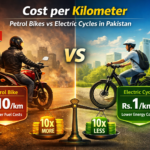
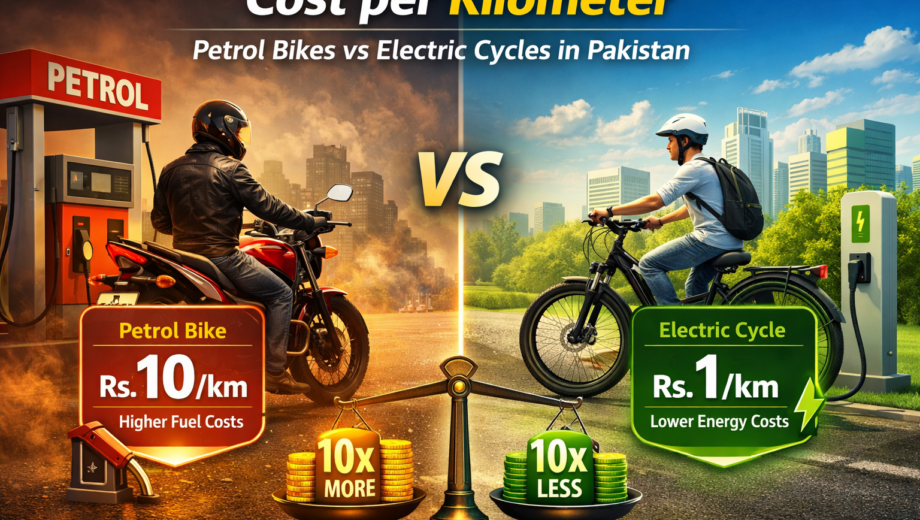
- Petrol bike: ~Rs. 10/km
- Electric cycle: ~Rs. 1/km
This means:
- A petrol bike costs 10× more per kilometer
- The difference compounds every day, not just occasionally
For daily commuters, this gap becomes significant within weeks, not years.
Monthly and Yearly Impact
Let’s translate cost per kilometer into real life.
For a rider traveling 25 km per day:
- Petrol bike: ~Rs. 250/day → Rs. 6,500/month
- Electric cycle: ~Rs. 25/day → ~Rs. 650/month
Over a year, the difference can exceed tens of thousands of rupees, even before maintenance costs are considered.
Maintenance: The Hidden Cost per Kilometer
Cost per kilometer is not only about fuel.
Petrol bikes accumulate additional costs through:
- Oil changes
- Engine servicing
- Wear-and-tear repairs
Electric cycles, with fewer mechanical parts, add very little to per-kilometer cost through maintenance. Over time, this further widens the gap between the two options.
From what we have observed at Magnus Electric, many riders underestimate how much maintenance quietly adds to petrol bike expenses until they switch.
When Cost per Kilometer Should Not Be the Only Factor
While cost per kilometer is critical, it should not be the only decision point.
Petrol bikes may still make sense if:
- You travel long distances daily
- You require highway speeds
- You frequently carry heavy loads
Electric cycles excel when used for:
- Urban commuting
- Predictable daily routes
- Cost-sensitive, regular travel
Understanding this distinction prevents unrealistic expectations.
Final Thoughts
Cost per kilometer provides the clearest, fairest comparison between petrol bikes and electric cycles. In Pakistan’s current economic environment, electric cycles offer a dramatic reduction in daily commuting costs for urban riders.
For students and office commuters traveling within cities, the financial logic is difficult to ignore. Lower running costs, stable expenses, and minimal maintenance make electric cycles a practical choice—not just an environmentally conscious one.
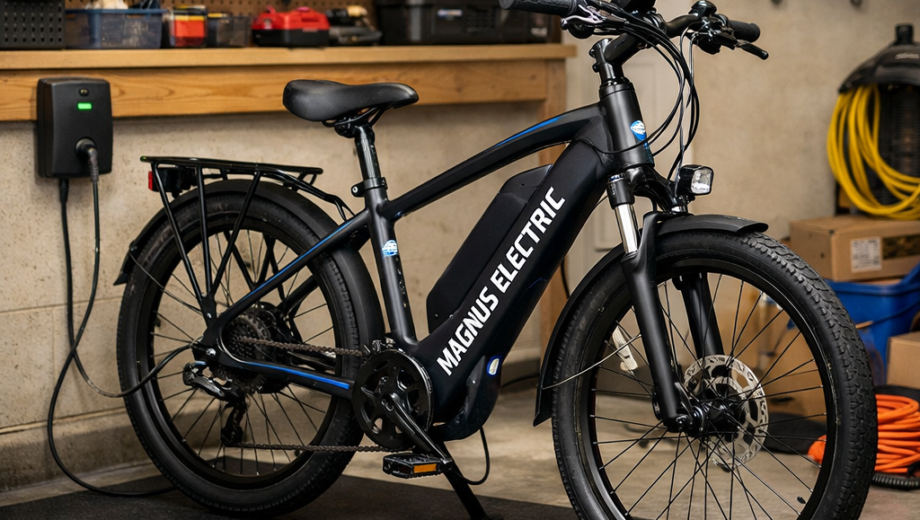
How Much Does It Really Cost to Commute Daily on an Electric Cycle in Pakistan?
When people hear about electric cycles, the first benefit they usually notice is “low running cost.”
But what does that actually mean in real numbers?
In a country like Pakistan—where fuel prices change frequently and daily commuting is unavoidable—understanding the true cost of commuting matters more than slogans.
This blog breaks down the real, practical cost of using an electric cycle for daily urban travel.
Why Daily Commute Cost Matters More Than Purchase Price
Most people focus heavily on the upfront price of a vehicle. While that matters, it is the daily and monthly running cost that quietly determines whether a commuting choice is sustainable.
For students and office workers, commuting is not optional. Even small daily expenses multiply into significant monthly and yearly costs.
That is where electric cycles change the equation.
The Core Cost Difference: Electricity vs Petrol


A petrol bike depends entirely on fuel, and fuel prices in Pakistan are both high and unpredictable. An electric cycle, on the other hand, runs on electricity, which is significantly cheaper per unit of travel.
On average:
- A petrol bike costs around Rs. 10 per kilometer
- An electric cycle costs around Rs. 1 per kilometer
This difference is not theoretical—it is based on real-world electricity and fuel pricing.
Daily Commute Cost: A Simple Example
Let’s take a common urban commute:
- Distance: 20 km per day (to work/university and back)
Petrol Bike
- 20 km × Rs. 10/km = Rs. 200 per day
- Monthly (26 working days): Rs. 5,200
- Yearly: Rs. 62,000+, excluding maintenance
Electric Cycle
- 20 km × Rs. 1/km = Rs. 20 per day
- Monthly (26 working days): Rs. 520
- Yearly: ~Rs. 6,000
The difference becomes very clear over time.
Monthly and Yearly Savings in Perspective
When comparing daily transport options, the real value of electric cycles emerges over months and years—not days.
For a regular commuter, switching to an electric cycle can mean:
- Predictable monthly expenses
- Protection from fuel price hikes
- Lower stress around daily travel costs
Even modest daily distances create meaningful savings when fuel is removed from the equation.
Maintenance Costs: Often Overlooked, Always Paid
Fuel is not the only recurring cost of petrol bikes. Maintenance quietly adds to the total cost of ownership.
Petrol bikes typically require:
- Engine oil changes
- Tune-ups
- Filters and spark plugs
- Mechanical repairs over time
Electric cycles avoid most of these expenses. With fewer moving parts and no combustion engine, maintenance is simpler and less frequent. Over a year, this further widens the cost gap between petrol and electric commuting.
Electricity Usage: Does Charging Increase Home Bills?
A common concern is whether charging an electric cycle significantly increases household electricity bills.
In practice, charging an electric cycle uses less electricity than many common household appliances. For most users, the increase in the monthly electricity bill is minimal—especially when compared to what they save on petrol.
Many users also choose to charge overnight, making the process convenient and unobtrusive.
What About Battery Replacement Costs?
Battery replacement is a long-term consideration, not a frequent one. With proper usage and charging habits, modern lithium-ion batteries are designed to last several years.
When evaluated alongside the thousands of rupees saved annually on fuel, battery replacement becomes a manageable and predictable expense rather than a recurring burden.
Who Benefits the Most Financially?
Electric cycles offer the greatest cost advantage to:
- Daily office commuters
- University students
- Households with frequent short trips
- Riders affected most by fuel price fluctuations
For these users, the savings begin almost immediately and compound over time.
Final Thoughts
The real cost of commuting is not what you pay once—it is what you pay every single day.
In Pakistan’s current economic environment, electric cycles offer a clear financial advantage for urban commuting. Lower running costs, minimal maintenance, and independence from fuel prices make them a practical option for anyone traveling short to medium distances daily.