When evaluating any commuting option, one question matters more than all others:
How much does it actually cost to travel one kilometer—every single day?
In Pakistan, where millions rely on two-wheelers for daily transport, cost per kilometer is the clearest way to compare petrol bikes and electric cycles without emotion or assumptions.
This blog breaks the comparison down in simple, real-world terms.
Why Cost per Kilometer Is the Most Honest Metric
Purchase price can be misleading. A cheaper vehicle can easily become more expensive over time if its running costs are high.
Cost per kilometer:
- Reflects daily usage
- Accounts for fuel or electricity consumption
- Shows long-term affordability clearly
For daily commuters, this metric removes guesswork and focuses on reality.
Petrol Bike: Cost per Kilometer Explained


A petrol bike’s cost per kilometer depends on fuel efficiency and fuel price—both of which fluctuate.
On average:
- Fuel consumption: 35–45 km per liter (city conditions)
- Average petrol price (urban): high and unstable
When calculated conservatively, this results in:
- ~Rs. 9–11 per kilometer, depending on traffic and riding habits
This cost increases automatically whenever fuel prices rise, regardless of how carefully you ride.
Electric Cycle: Cost per Kilometer Explained


Electric cycles consume electricity instead of fuel, and electricity costs are far more stable.
On average:
- One full charge covers 40–50 km
- Electricity cost per full charge is very low
When broken down:
- ~Rs. 1 per kilometer, sometimes even less depending on local electricity rates
This cost remains largely predictable month after month.
Side-by-Side Cost Comparison
Looking purely at cost per kilometer:
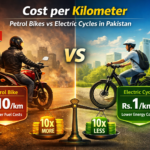
- Petrol bike: ~Rs. 10/km
- Electric cycle: ~Rs. 1/km
This means:
- A petrol bike costs 10× more per kilometer
- The difference compounds every day, not just occasionally
For daily commuters, this gap becomes significant within weeks, not years.
Monthly and Yearly Impact
Let’s translate cost per kilometer into real life.
For a rider traveling 25 km per day:
- Petrol bike: ~Rs. 250/day → Rs. 6,500/month
- Electric cycle: ~Rs. 25/day → ~Rs. 650/month
Over a year, the difference can exceed tens of thousands of rupees, even before maintenance costs are considered.
Maintenance: The Hidden Cost per Kilometer
Cost per kilometer is not only about fuel.
Petrol bikes accumulate additional costs through:
- Oil changes
- Engine servicing
- Wear-and-tear repairs
Electric cycles, with fewer mechanical parts, add very little to per-kilometer cost through maintenance. Over time, this further widens the gap between the two options.
From what we have observed at Magnus Electric, many riders underestimate how much maintenance quietly adds to petrol bike expenses until they switch.
When Cost per Kilometer Should Not Be the Only Factor
While cost per kilometer is critical, it should not be the only decision point.
Petrol bikes may still make sense if:
- You travel long distances daily
- You require highway speeds
- You frequently carry heavy loads
Electric cycles excel when used for:
- Urban commuting
- Predictable daily routes
- Cost-sensitive, regular travel
Understanding this distinction prevents unrealistic expectations.
Final Thoughts
Cost per kilometer provides the clearest, fairest comparison between petrol bikes and electric cycles. In Pakistan’s current economic environment, electric cycles offer a dramatic reduction in daily commuting costs for urban riders.
For students and office commuters traveling within cities, the financial logic is difficult to ignore. Lower running costs, stable expenses, and minimal maintenance make electric cycles a practical choice—not just an environmentally conscious one.